Famous People Born In 1825
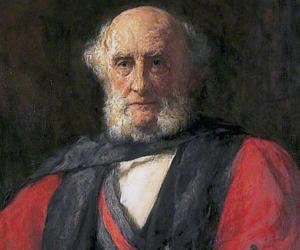
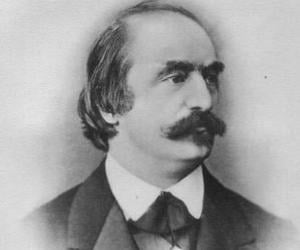
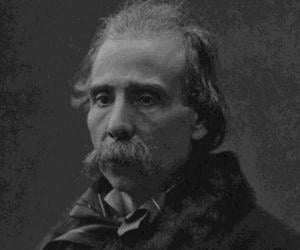
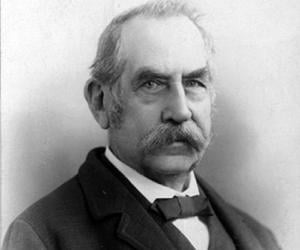
Discover the most famous people born in 1825. The list includes people like Thomas Henry Huxley, Dadabhai Naoroji, Jean-Martin Charcot, Roy Bean, Charles Frederick Worth and many more. This list of celebrities is loosely sorted by popularity. People featured on this list, include journalists, lawyers, poets and artists born in 1825. This list includes people from United States, Germany, United Kingdom and many more countries.
Vote for Your Favourite Person
Right IconThis ranking is based on an algorithm that combines various factors, including the votes of our users and search trends on the internet.
1
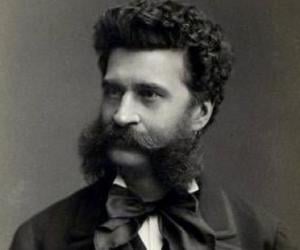
Johann Strauss II
(Austrian Composer of Light Music)
Birthdate: 25th October
Sun Sign: Scorpio
Birthplace: Neubau, Vienna, Austria
Died: June 3, 1899
Johann Strauss II, also known as The Waltz King, was initially pushed by his composer father Johann Strauss I to become a banker, while he learned the violin secretly and conducted a restaurant band. Best remembered for his iconic composition The Blue Danube, he redefined the 19th-century waltzes and operettas.
Birthdate: 2nd December
Sun Sign: Sagittarius
Birthplace: State of Rio de Janeiro, Brazil
Died: December 5, 1891
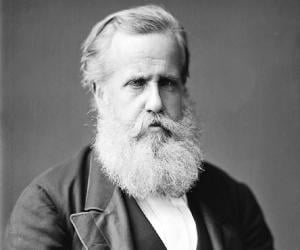
Pedro II, son of the first Brazilian emperor, Dom Pedro I, is also remembered by his countrymen as the Magnanimous. He made Brazil prosper while other South American nations were torn apart by strife and clashes. Following his deposition, by a coup to overthrow the monarchy, he sailed to Europe.
Birthdate: 16th January
Sun Sign: Capricorn
Birthplace: Richmond, Virginia, United States
Died: July 30, 1875
4
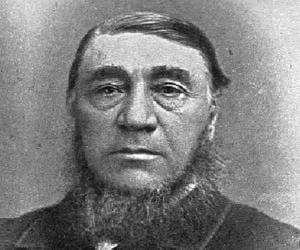
Paul Kruger(5th President of the South African Republic (1883 - 1902))
Birthdate: 10th October
Sun Sign: Libra
Birthplace: Steynsburg, South Africa
Died: July 14, 1904
Paul Kruger was a South African politician who served as the last State President of the South African Republic. Revered by his admirers as a tragic folk hero, Kruger was one of the most influential military and political personalities in 19th-century South Africa. His life inspired the 1941 German film Ohm Krüger, in which Kruger was played by Emil Jannings.
Birthdate: 4th May
Sun Sign: Taurus
Birthplace: Ealing, London, England
Died: June 29, 1895
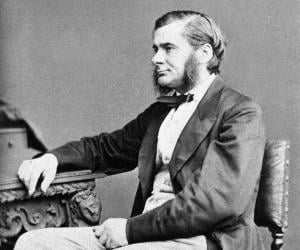
Thomas Henry Huxley was an English biologist and anthropologist. He specialized in comparative anatomy and was a proponent of Charles Darwin's theory of evolution. Despite having little formal schooling, he went on to become one of the finest comparative anatomists of the 19th century. He was the chair of natural history at the Royal School of Mines for 31 years.
6
Dadabhai Naoroji(Indian Political Leader Who was the Second Person of Asian Descent to be a British MP)
Birthdate: 4th September
Sun Sign: Virgo
Birthplace: Mumbai, Maharashtra, India
Died: June 30, 1917
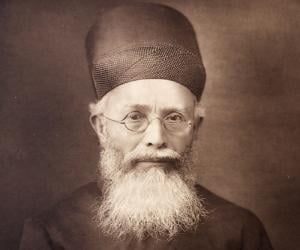
Dadabhai Naoroji was an Indian scholar and political leader. Dubbed the Grand Old Man of India, Naoroji is remembered for co-founding the Indian National Congress where he served as the president on three occasions. He also played an important role in India's fight for freedom, popularizing the Indian wealth drain theory through his book Poverty and Un-British Rule in India.
Birthdate: 29th November
Sun Sign: Sagittarius
Birthplace: Paris
Died: August 16, 1893
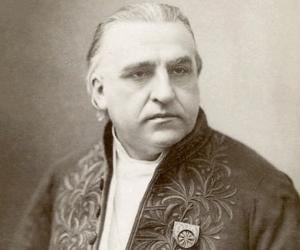
French neurologist Jean-Martin Charcot is best remembered for his work with hysteria patients. He was also an extraordinary professor and had Sigmund Freud as one of his students. He was one of the first to include photos and drawings as tools for instruction in neurology classes.
8
James Smith Bush
(Jurist, Writer, Lawyer, Priest, Politician)
Birthdate: 15th June
Sun Sign: Gemini
Birthplace: Rochester
Died: November 11, 1889
The progenitor of the Bush political family, James Smith Bush, was a jurist by training before he was drawn to divinity and ordained as a priest. He began his career as rector of the Grace Church in Orange, New Jersey. Later, he visited other parts of the country, writing several books on religion, most significant of them being Evidence of Religion.
Birthdate: 13th October
Sun Sign: Libra
Birthplace: Bourne
Died: March 10, 1895
10
Julia, Princess of Battenberg
(Princess)
Birthdate: 24th November
Sun Sign: Sagittarius
Birthplace: Warsaw, Congress Poland
Died: September 19, 1895
Apart from being the wife of Prince Alexander of Hesse, Julia, Princess of Battenberg, was also the daughter of German-Polish general Hans Moritz Hauke. Her lack of royal descent was a matter of concern initially, but Alexander eventually married the 6-month pregnant Julia he had fallen in love with.
11
George Inness
(American Landscape Painter)
Birthdate: 1st May
Sun Sign: Taurus
Birthplace: Newburgh, New York, United States
Died: August 3, 1894
12
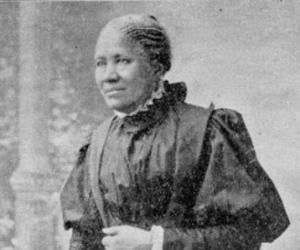
Frances Harper
(American Abolitionist, Suffragist, Poet, Temperance Activist)
Birthdate: 30th November
Birthplace: Baltimore, Maryland, United States
Died: 1911 AD
Birthdate: 31st October
Sun Sign: Scorpio
Birthplace: Melrose, Scotland
Died: April 3, 1910
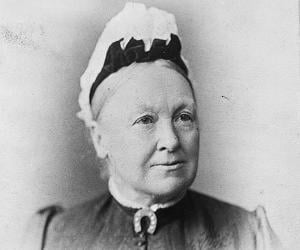
Catherine Helen Spence was a 19th-century Scottish-born Australian author, teacher, journalist, and politician. One of the leading suffragists of her era, she was also a minister of religion and social worker. She supported electoral proportional representation. Australian writer and feminist Miles Franklin called her the "Greatest Australian Woman".
14
Charles Garnier
(architect)
Birthdate: 6th November
Sun Sign: Scorpio
Birthplace: Paris
Died: August 3, 1898
Charles Garnier was a French architect best known for designing important landmarks, such as the Opéra de Monte-Carlo and Palais Garnier. Charles Garnier also designed several public and private buildings on the Italian Riviera and is thereby sometimes credited with turning the place into a tourist attraction.
15
Karl Heinrich Ulrichs
(German Lawyer and Jurist Who is Regarded as a Pioneer of Sexology and the Modern Gay Rights Movement)
Birthdate: 28th August
Sun Sign: Virgo
Birthplace: Aurich, Germany
Died: July 14, 1895
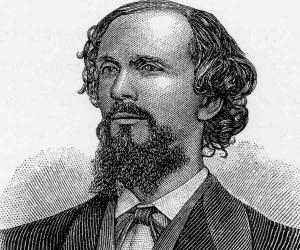
Karl Heinrich Ulrichs was a German lawyer, journalist, jurist, and writer. Today, he is widely regarded as a pioneer of the modern gay rights movement and sexology. Ulrichs is considered the first openly gay man in the history of mankind. In August 1867, Karl Heinrich Ulrichs urged the goverment to revoke anti-homosexual laws, becoming the first homosexual to do so.
16
Hans Gude
(Norwegian Romanticist Painter)
Birthdate: 13th March
Sun Sign: Pisces
Birthplace: Oslo, Norway
Died: August 17, 1903
Hans Gude was a Norwegian romanticist painter best remembered for his landscape paintings. Counted among Norway's leading landscape painters along with Johan Christian Dahl, Gude is also considered the backbone of Norwegian National Romanticism. Over the course of his illustrious career, Hans Gude won several honors and medals.
17
Harriet E. Wilson
(American Novelist)
Birthdate: 15th March
Sun Sign: Pisces
Birthplace: Milford, New Hampshire, United States
Died: June 28, 1900
18
Ferdinand von Mueller(German-Australian Botanist Who Founded the National Herbarium of Victoria and Named Many Australian Plants)
Birthdate: 30th June
Sun Sign: Cancer
Birthplace: Rostock, Germany
Died: October 10, 1896
Ferdinand von Mueller was a German-Australian geographer, physician, and botanist. He is credited with founding the National Herbarium of Victoria, the oldest scientific institution in Victoria. He is also credited with naming several Australian plants. Such is his popularity that many plants, animals, journals, and places in Australia are named after him.
19
William Stubbs
(Historian)
Birthdate: 21st June
Sun Sign: Gemini
Birthplace: Knaresborough, England
Died: April 22, 1901
20
Hashim Jalilul Alam Aqamaddin
(Politician)
Birthdate: 21st May
Sun Sign: Gemini
Birthplace: Sultan Lama, Brunei Town, Brunei
Died: May 10, 1906
21
John Hunt Morgan
(Military General)
Birthdate: 1st June
Sun Sign: Gemini
Birthplace: Huntsville, Alabama, U.S.
Died: September 4, 1864
Birthdate: 11th January
Sun Sign: Capricorn
Birthplace: Kennett Square, Pennsylvania, United States
Died: December 19, 1878
Birthdate: 30th November
Sun Sign: Sagittarius
Birthplace: La Rochelle, France
Died: August 19, 1905
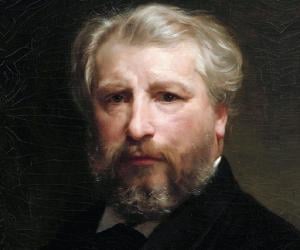
William-Adolphe Bouguereau was a French academic painter who enjoyed significant popularity in the United States and France. Renowned for his realistic genre paintings, which focused on the beauty of the female human body, Bouguereau received top prices for his paintings and numerous official honors during his lifetime.
24
George H. Pendleton
(Politician)
Birthdate: 19th July
Sun Sign: Cancer
Birthplace: Cincinnati, Ohio, United States
Died: November 24, 1889
Birthdate: 30th November
Birthplace: Eswatini
Died: 1868 AD
26
Vaso Pasha
(A Major Figure of the Albanian Renaissance)
Birthdate: 17th September
Sun Sign: Virgo
Birthplace: Shkodër, Vilayet of Scutari, Ottoman Empire
Died: June 29, 1892
A renowned poet and author from Northern Albania, Vaso Pasha was a key figure of the Rilindja movement, commonly known as the Albanian Renaissance. He was well-versed in multiple languages and had also worked at the British consulate in Shkodër and as the mutasarrif of Mount Lebanon Mutasarrifate.
27
Donald Currie
(Politician)
Birthdate: 17th September
Sun Sign: Virgo
Birthplace: Greenock, Scotland
Died: April 13, 1909
Donald Currie was a Scottish politician, shipowner, and philanthropist. He is credited with founding the Castle shipping company, which had ships plying between Calcutta and Liverpool. A noted philanthropist, Currie donated to several institutions like the University College Hospital and the University of Edinburgh. Donald Currie also received several honors including the Royal Society of Arts' Fothergill gold medal.
28
Eduard Hanslick
(Music Critic)
Birthdate: 11th September
Sun Sign: Virgo
Birthplace: Prague, Czech Republic
Died: August 6, 1904
29
Camilo Castelo Branco
(One of the Best Portuguese Romantic Novelists of the 19th Century)
Birthdate: 16th March
Sun Sign: Pisces
Birthplace: Mártires, Lisbon, Portugal
Died: June 1, 1890
Camilo Castelo Branco was a Portuguese writer who wrote more than 260 books, which include novels, plays, and essays, during an illustrious writing career that spanned more than three decades. Best remembered for his peculiar wit, Camilo Castelo Branco was made a viscount for his contributions to literature in 1885. Some of his works have been adapted into films.
30
Richard Henry Stoddard
(Writer, Poet)
Birthdate: 2nd July
Sun Sign: Cancer
Birthplace: Hingham
Died: May 12, 1903
31
Harriet Hanson Robinson
(Poet)
Birthdate: 8th February
Sun Sign: Aquarius
Birthplace: Boston, Massachusetts, United States
Died: December 22, 1911
32
Conrad Ferdinand Meyer
(Master of Literary Realism Who Is Mainly Remembered for Stirring Narrative Ballads Like ‘Die Füße Im Feuer')
Birthdate: 11th October
Sun Sign: Libra
Birthplace: Zürich, Switzerland
Died: November 28, 1898
33
Alexander Mozhaysky
(Naval officer)
Birthdate: 21st March
Sun Sign: Aries
Birthplace: Kotka, Finland
Died: March 1, 1890
34
James Skivring Smith
(Politician)
Birthdate: 26th February
Sun Sign: Pisces
Birthplace: Charleston, South Carolina, United States
Died: 1892 AD
35
Brooke Foss Westcott
(British Bishop, Biblical Scholar and Theologian)
Birthdate: 12th January
Sun Sign: Capricorn
Birthplace: Birmingham, England
Died: July 27, 1901
Apart from serving as the Bishop of Durham, Brooke Foss Westcott also established himself as a biblical scholar. A Trinity College alumnus, he later worked as a professor of divinity at Cambridge. His works include the iconic critical edition of the Greek New Testament he had penned with Fenton J.A. Hort.
Birthdate: 7th February
Sun Sign: Aquarius
Birthplace: Eilenburg, Germany
Died: April 26, 1908
37
Jassim bin Mohammed Al Thani
(Politician)
Birthdate: 30th November
Birthplace: Doha, Qatar
Died: July 17, 1913
38
Sir Edward Frankland
(Chemist)
Birthdate: 18th January
Sun Sign: Capricorn
Birthplace: Catterall, Lancashire, England
Died: August 9, 1899
39
Angus MacAskill
(Canadian Giant, the Strongest Man Who Ever Lived)
Birthdate: 30th November
Birthplace: Berneray, Scotland
Died: August 8, 1863
At 7’9”, Angus MacAskill was known as the world’s talent natural giant. The Scottish-born Canadian earned the nickname Gille Mòr, or Big Boy, in his neighborhood. Apart from touring the world for shows, he also worked at P.T. Barnum's circus and performed in front of Queen Victoria at Windsor Castle.
40
Francis H. Underwood
(Writer)
Birthdate: 12th January
Sun Sign: Capricorn
Birthplace: Enfield, Massachusetts, United States
Died: August 7, 1894
41
Frederick James Furnivall
(Philologists)
Birthdate: 4th February
Sun Sign: Aquarius
Birthplace: Egham, England, United Kingdom
Died: July 2, 1910
42
Henry Walter Bates
(Naturalist)
Birthdate: 8th February
Sun Sign: Aquarius
Birthplace: Leicester, England
Died: February 16, 1892
Birthdate: 18th February
Sun Sign: Aquarius
Birthplace: Komarom, Hungary
Died: May 5, 1904
44
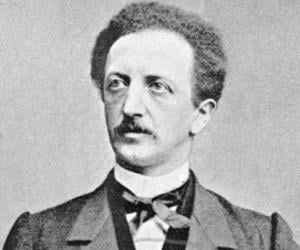
Ferdinand Lassalle
(Prussian-German Jurist, Philosopher and Politician)
Birthdate: 11th April
Sun Sign: Aries
Birthplace: Wrocław, Poland
Died: August 31, 1864
Enamoured by the ideas of French and German philosophers, Ferdinand Lassalle initially aspired to be a lecturer. He later joined the socialist cause and spearheaded Germany’s social democratic movement. He also introduced terms such as the iron law of wages and concepts such as Lassallism, or achieving socialist ideals through the state.
45
Lucius Quintus Cincinnatus Lamar II
(Jurist)
Birthdate: 17th September
Sun Sign: Virgo
Birthplace: Eatonton, Georgia, United States
Died: January 23, 1893
46
Paschal Beverly Randolph
(Physician, Occultist)
Birthdate: 8th October
Sun Sign: Libra
Birthplace: New York City, New York, United States
Died: July 29, 1875
47
Felix Hoppe-Seyler
(German Chemist and Physiologist Who Founded the Disciplines of Molecular Biology and Biochemistry)
Birthdate: 26th December
Sun Sign: Capricorn
Birthplace: Freyburg, Germany
Died: August 10, 1895
Felix Hoppe-Seyler was a German chemist and physiologist. He is credited with founding the disciplines of molecular biology and biochemistry. He is also credited with founding Journal for Physiological Chemistry and worked as its editor until his demise in 1895. Felix Hoppe-Seyler also played an important role as a teacher; among his students were Albrecht Kossel and Friedrich Miescher.
Birthdate: 15th October
Sun Sign: Libra
Birthplace: Berlin Palace, Berlin, Germany
Died: May 17, 1889
49
Grand Duchess Alexandra Nikolaevna of Russia
(Aristocrat)
Birthdate: 24th June
Sun Sign: Cancer
Birthplace: Pushkin, Saint Petersburg, Russia
Died: August 10, 1844
50
Émile Ollivier
(Former Prime Minister of France (1869 - 1870))
Birthdate: 2nd July
Sun Sign: Cancer
Birthplace: Marseille, France
Died: August 20, 1913
Émile Ollivier was a French statesman who became the prime minister of France in 1869. He started out as an avid republican and opposed Emperor Napoleon III. Once the emperor fell, Ollivier entered the cabinet and took over as the prime minister. He fell out of favor after the French Army performed badly in the Franco-Prussian War.